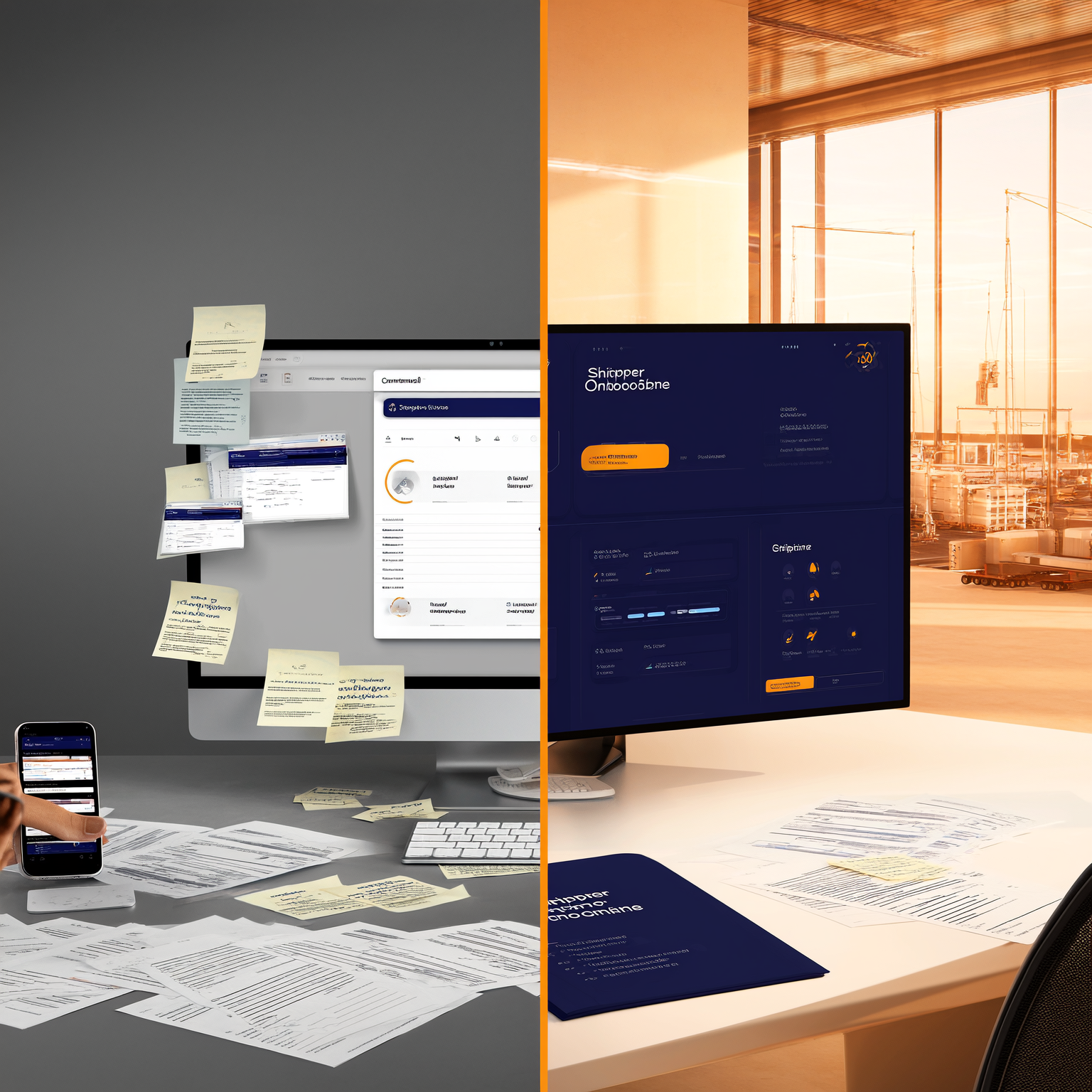
AI-Powered Shipper Onboarding: How Transport Companies Cut Setup Time from Days to Hours
Here's how shipper onboarding usually goes in cross-border transport: your sales team lands a new account. They send over a setup form. The shipper fills out half of it. Someone from dispatch follows up over email. The shipper asks about eManifest requirements. Your ops manager explains it on a call. The shipper sends their carrier code in a separate email thread. By the time the first pickup is scheduled, nobody's confirmed if the documentation is actually complete.
Driver shows up. Paperwork's wrong. Pickup gets delayed. You look disorganized. The shipper starts second-guessing their choice.
And this isn't a one-off. It happens with every new shipper because onboarding lives in email chains, phone tag, and half-documented processes that change depending on who's handling it that day.
AI-powered onboarding workflows fix this. You build the process once — carrier code verification, cross-border compliance requirements, documentation checklists, dispatch coordination — and AI walks every new shipper through it the same way. No dispatcher babysitting it. No missed steps. Clean onboarding packets before the first run ever goes out.
Your first shipment with a new client looks like your hundredth.
Why Manual Shipper Onboarding Breaks Down in Cross-Border Transport
Most transport companies don't have a shipper onboarding problem — they have an inconsistency problem. The information you need exists. Your team knows what to ask for. But the process of actually collecting it, verifying it, and getting it into the right hands happens differently every time.
One dispatcher might walk a new shipper through eManifest requirements on a call and document it in their own notes. Another sends a generic email with a PDF attachment and hopes the shipper reads it. A third assumes the shipper already knows the drill because they've worked with other cross-border carriers before.
Then dispatch schedules the first pickup. The driver gets the run sheet. And that's when you find out what didn't get captured:
- Carrier code's missing or formatted wrong
- Commercial invoice isn't ready because the shipper didn't know it was required at pickup
- PARS number wasn't pre-filed because nobody confirmed who handles that step
- Shipper thought "cross-border ready" just meant the freight was palletized
The pickup either gets delayed or your driver sits there while the shipper scrambles to pull docs together. Either way, it's a bad first impression — and it didn't happen because your team doesn't know what they're doing. It happened because the onboarding process lives in too many places and depends on too many people remembering the same steps.
What AI-Powered Onboarding Actually Does for Transport Operations
AI onboarding workflows aren't about replacing your dispatch team. They're about making sure the same process happens every single time, regardless of who's handling it or how busy the day is.
You build the workflow once. It captures everything you need from a new shipper before the first dispatch goes out:
- Carrier code confirmation and CBSA/CBP verification
- Cross-border documentation requirements — commercial invoices, NAFTA/USMCA certificates, country of origin declarations
- eManifest and PARS responsibilities — who pre-files, who provides the trip number, who confirms release
- Pickup logistics — dock hours, contact info, special handling requirements
- Billing and payment terms setup
AI walks the shipper through this in a structured sequence. It doesn't let them skip steps. It doesn't assume they already know what a PARS is. It asks follow-up questions based on their answers — if they select "hazmat," it triggers the dangerous goods documentation checklist. If they're shipping to Canada, it confirms who's handling the A8A release notification.
And it all flows into your dispatch system as a clean onboarding packet — verified carrier code, confirmed documentation requirements, pre-filled shipper profile. Your team isn't hunting through email threads or trying to piece together half-answered forms. They've got what they need before the driver even leaves the yard.
The First Shipment Sets the Tone — Make It Count
You know what a good first run looks like. Driver shows up on time. Shipper's ready. Paperwork's clean. eManifest is pre-filed. Freight crosses without a hitch. The shipper gets a release notification before they even have to ask.
That's when you earn the next shipment.
But when the first run is messy — delays, missing docs, back-and-forth on compliance requirements — it doesn't matter how well the second or third shipment goes. The shipper's already wondering if this is what working with you is going to be like every time.
AI-powered onboarding makes sure the first run is dialed in. Because the shipper went through a structured setup process, they already know what you need from them. They've confirmed their carrier code. They know their documentation responsibilities. They understand how eManifest works and who handles what.
There's no learning curve. No surprises. No "we didn't know you needed that" conversations at the dock.
And your dispatch team isn't improvising. They're executing a process that's already been handled — same way, every time, no matter how many new shippers you're bringing on that week.
Build It Once, Scale It Forever
The best part about AI onboarding workflows? You don't rebuild them for every new shipper. You build the process once — your compliance requirements, your documentation checklist, your dispatch coordination steps — and it runs the same way for shipper number five and shipper number five hundred.
Your team isn't spending hours walking new clients through the same setup questions over and over. They're not troubleshooting incomplete onboarding forms or chasing missing carrier codes the day before a pickup. They're running freight.
And when you do need to update the process — new CBSA requirement, updated PARS procedures, change in your billing terms — you update the workflow once. Every new shipper from that point forward gets the current version. No retraining. No hoping everyone on dispatch got the memo.
This is what operational consistency looks like at scale. Not more people doing the same manual work. The same structured process, automated, every time.
Your First Run Should Look Like Your Hundredth
Onboarding a new shipper shouldn't take days of back-and-forth. It shouldn't leave your dispatch team guessing if they've got everything they need. And it definitely shouldn't result in drivers showing up without the right paperwork because someone forgot to confirm the eManifest requirements.
AI-powered onboarding workflows give you a structured, consistent process that captures everything you need before the first pickup. Clean onboarding packets. Verified carrier codes. Documented compliance requirements. No email chains. No missed steps. No bad first impressions.
EntryPoint AI builds these systems specifically for cross-border transport companies — because we know what it takes to run clean operations in this industry. We've worked the floor. We know what breaks. And we know how to fix it.
Want to see how this works for your operation? Let's talk. Book a call at https://entrypointai.ca and we'll walk you through exactly how AI onboarding workflows can tighten up your shipper setup process — so your first run with a new client looks like your hundredth.
