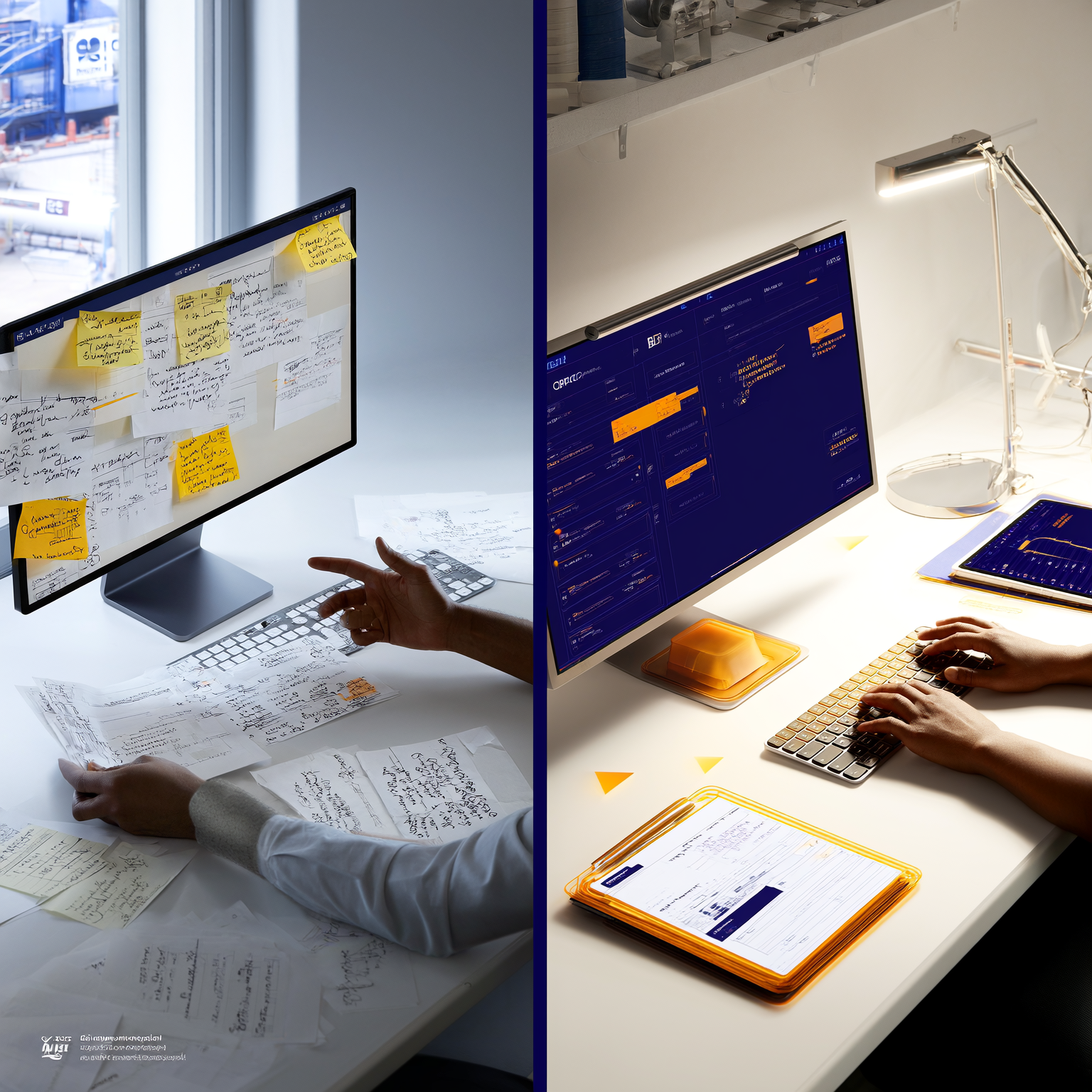
The Real Cost of Keeping Your NVOCC Process "In Your Head"
Every consolidator I talk to runs the same playbook: you've got your carrier relationships locked in, you know exactly how each customs broker wants their pre-alerts formatted, and you can eyeball a shipper's cargo and tell me which consolidation it belongs in before the commercial invoice even hits your desk.
It works. Until the day your lead coordinator gives two weeks' notice.
Now you're explaining to your replacement why Broker A needs ISF details 72 hours out but Broker B only needs 24. Why certain shippers always short you on packing lists. Why that one carrier contact gets priority calls when space gets tight. Why you build Thursday consolidations differently than Monday runs.
Except you can't explain it all. Because half of it you don't even realize you're doing anymore. It's just instinct after fifteen years of working consolidations.
That's the problem with tribal knowledge in NVOCC operations. It works perfectly — right up until the person who holds it walks out the door.
What Actually Breaks When Process Knowledge Walks
Let's be specific about what happens when your consolidation process exists only in someone's head:
- Pre-alert formatting becomes inconsistent. Your new coordinator sends CBSA pre-alerts the same way they send CBP pre-alerts. One broker calls asking for more detail. Another complains you're sending too much. Same data, different expectations — and nobody documented which broker needs what.
- Carrier relationships deteriorate. You've spent years building trust with your steamship line contacts. They give you space when things are tight because you communicate early and consistently. Your replacement doesn't know that Thursday bookings need a heads-up by Tuesday morning, or that certain equipment types require 48-hour notice. Suddenly you're getting bumped to the next sailing.
- Shipper documentation gaps turn into customs holds. Experienced coordinators know which shippers chronically short you on commercial invoice detail, which ones mess up HS classifications, and which ones you need to chase for packing lists before you even start the consolidation. New staff don't. So cargo that should clear in two hours sits at the warehouse for two days while you scramble for paperwork.
- Consolidation decisions become arbitrary. Should this shipment ride on Friday's consolidation or wait for Monday? Depends on the destination broker's cut-off times, the consignee's delivery windows, and whether you've got enough LCL volume to justify the cost. That calculus lives in your head. Your new hire is guessing.
None of this kills your business overnight. But it chips away at the margins. Delays compound. Broker relationships strain. Shippers start asking why things take longer than they used to.
Why Traditional Documentation Doesn't Solve This
I know what you're thinking: "We've got SOPs. They're in a binder in the office."
Right. And nobody's opened that binder since the last audit.
Here's why traditional process documentation fails in NVOCC operations:
It's written once and never updated. You documented your consolidation workflow three years ago when your operation looked completely different. You've added two new carriers since then. Your primary customs broker changed their eManifest requirements. Half your shipper base has turned over. The binder hasn't changed.
It's not accessible when people need it. Your coordinator is on the phone with a shipper trying to sort out a missing packing list while building a consolidation and coordinating container pickup. They're not stopping to flip through a binder. They're making a judgment call based on what they think is right — which may or may not match what you'd do.
It doesn't capture the "why" behind decisions. SOPs tell people what to do. They don't explain why you prioritize certain consolidations over others, why you route specific cargo through specific brokers, or why you handle documentation differently for bonded versus non-bonded freight. Without context, people follow steps without understanding outcomes.
It doesn't scale with complexity. As your operation grows — more shippers, more carriers, more destination ports, more regulatory requirements — your process documentation should grow with it. Instead, it stays static while your team improvises workarounds that never get captured anywhere.
How AI Turns Process Knowledge Into Deployable Systems
This is where AI actually earns its place in NVOCC operations — not by replacing your expertise, but by capturing it and making it accessible when your team needs it.
Here's what that looks like in practice:
Voice-to-documentation workflow capture. You're not sitting down to write a 40-page operations manual. You're talking through your consolidation process the same way you'd train a new coordinator. AI captures that conversation, structures it into documented steps, and highlights the decision points that matter — broker-specific pre-alert formats, carrier booking timelines, shipper documentation requirements, routing logic for different cargo types.
Contextual access during live operations. Your team isn't searching through files. They're pulling up guidance at the moment they need it — while they're on a call with a shipper, while they're building a manifest, while they're coordinating container dispatch. Real-time support based on the actual scenario they're handling.
Automatic updates when processes change. When your primary customs broker updates their PARS pre-alert requirements, that change gets captured and pushed to your documented workflow immediately. Your team isn't working off outdated information. They're operating on current process — because the system updates as your operation evolves.
Consistency without rigidity. AI-documented processes aren't rigid scripts. They're frameworks that preserve your core logic while allowing for the judgment calls that experienced coordinators need to make. The system captures what stays constant — broker expectations, regulatory requirements, carrier parameters — so your team can focus their attention on what changes shipment to shipment.
What This Actually Looks Like in Your Operation
Let's ground this in a real scenario:
Your coordinator is building Friday's consolidation for a CBSA-regulated delivery to a broker in Montreal. The system prompts them with your documented process: this broker requires eManifest details by Thursday 4 PM, expects HS codes at the 8-digit level, and needs advance notice on any cargo requiring CFIA inspection. It flags that one of the shippers in this consolidation historically shorts you on packing list detail — chase that now, not after the container is packed.
Same coordinator, different consolidation — this one's headed to a bonded warehouse in Vancouver with a CBP entry to follow. Different process, different requirements, different broker expectations. The system adapts to the context and surfaces the right guidance for this specific scenario.
That's not automation. That's knowledge transfer at the point of need.
Survival When You're Not the Bottleneck Anymore
Consistency in NVOCC operations isn't about control. It's about building a business that doesn't collapse when one person leaves, gets sick, or takes a vacation.
The coordinators who've been with you for ten years? They've absorbed your process through repetition. They know what you'd do because they've watched you do it a thousand times.
Your new hires don't have that. They're guessing. And every guess that doesn't match your process creates friction — with brokers, with carriers, with shippers, with compliance.
AI gives you a way to capture what you know, structure it into deployable systems, and make it accessible when your team is in the middle of live operations. Not as a replacement for judgment — as a foundation for it.
Because the goal isn't to document every possible scenario. It's to make sure your team is working from the same baseline process you built, so when they need to make a judgment call, they're making it from a position of understanding — not guessing.
That's how you scale beyond what one person can manage. That's how you preserve the operational expertise that makes your consolidation business work.
Want to see how AI can capture your NVOCC process and turn it into something your team actually uses? Visit entrypointai.ca and book a call. We'll walk through your operation and show you exactly how this works in practice — no generic demos, just real outcomes for consolidators who know this business.
