Why Your LCL Consolidations Are Slower Than They Should Be (And How to Fix It)
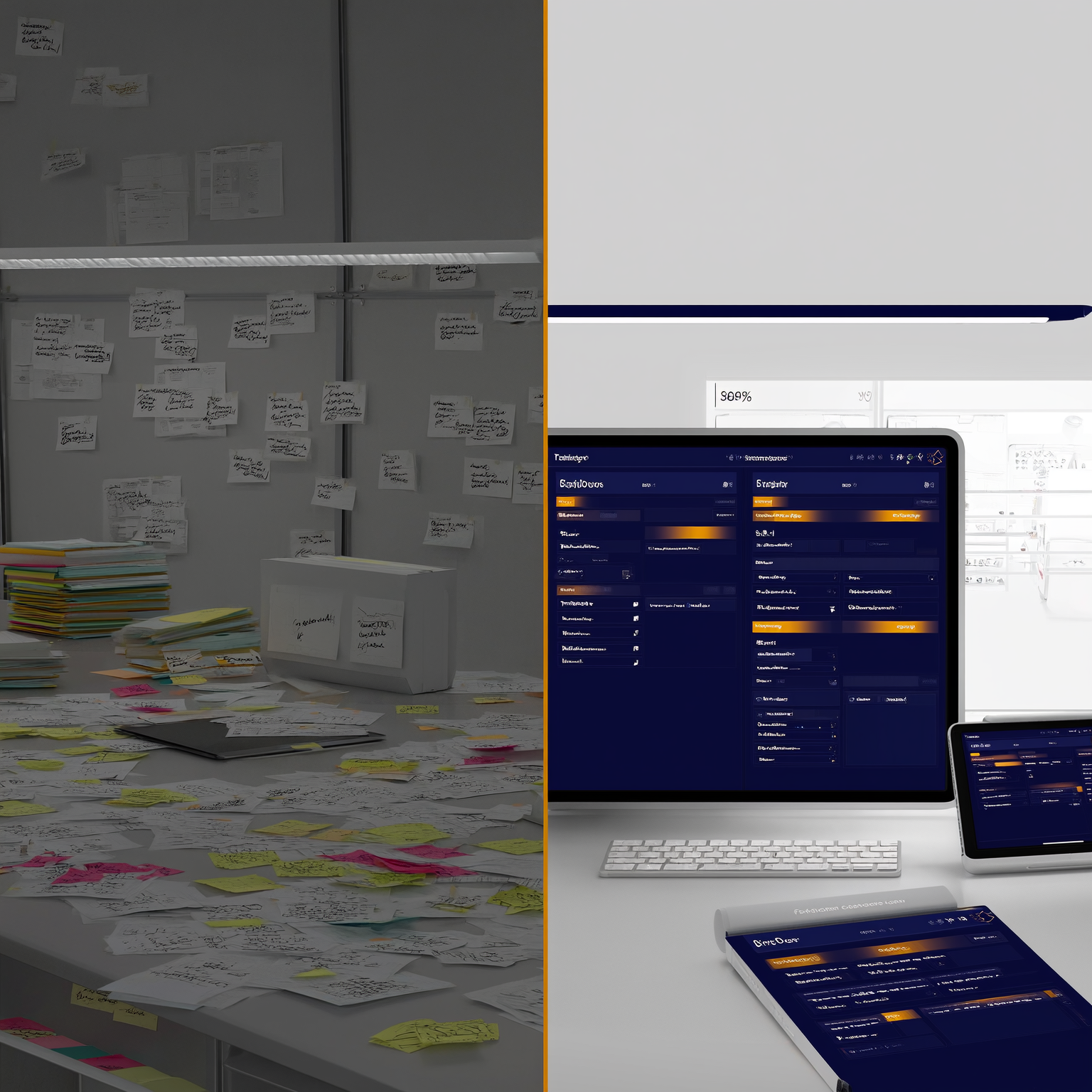
Here's what I've seen at every NVOCC and consolidation operation I've worked with: it's not the volume that slows you down. It's that every person on your team handles the same shipment differently.
One ops coordinator builds pre-alerts with every detail front-loaded. Another sends the bare minimum and deals with broker questions later. Your senior consolidator has a process they've refined over ten years — but it lives entirely in their head. New staff? They're still asking basic questions six months in because nobody documented how things actually work.
The result? Delayed pre-alerts. Inconsistent HBL data. Broker calls asking for information you already have. CBSA holds because something didn't match. Container pickups that should take 20 minutes but stretch into an hour because the release paperwork wasn't ready.
You don't have a staffing problem. You have a consistency problem. And AI can fix it — if you deploy it the right way.
The Real Cost of Tribal Knowledge in Consolidation Operations
Every consolidator runs on tribal knowledge. The stuff that never gets written down. How to handle a tricky HS classification when you're consolidating mixed cargo. Which details CBSA wants in the eManifest that aren't technically required but prevent delays. How your best people coordinate LCL pickups so containers don't sit at the port racking up demurrage.
That knowledge is valuable. It's also fragile.
When your top consolidator takes vacation, shipments slow down. When someone leaves, you lose months of operational refinement. When you hire new staff, they spend half a year figuring out what the senior team already knows — and in the meantime, they're creating inconsistencies that your brokers and partners have to clean up.
Here's a scenario every NVOCC has lived through: A shipper calls asking why their cargo is held at the border. You check with the broker. The pre-alert you sent didn't include the commercial invoice reference number — something your senior ops person always includes, but the newer coordinator didn't know to add. Now you're scrambling to send updated docs, the broker is filing amendments, and the shipper is wondering why your process isn't tighter.
It's not a training issue. It's a documentation issue. The process exists — it's just locked in someone's head instead of being standardized across your operation.
What Standardized SOPs Actually Look Like for Consolidators
When I say "standardized SOPs," I don't mean a binder that sits on a shelf. I mean documented, accessible, step-by-step processes that show your team exactly how to execute consolidation workflows the way your best people do it.
For an NVOCC, that might look like:
- Booking and container coordination: How to confirm container space, communicate cut-off times to shippers, and track stuffing schedules so nothing gets left behind
- HBL issuance: Required fields, how to handle split shipments, when to issue express release vs. original, and what documentation needs to go to each party
- Pre-alert creation: Standard format for CBSA and CBP pre-alerts, required data fields, timelines for submission, and how to handle high-risk cargo or first-time importers
- Freight coordination with partner brokers: What information to send, when to send it, and how to handle common exceptions like missing COOs or incomplete commercial invoices
- Release and dispatch: How to confirm customs release, coordinate dray pickups, communicate with consignees, and manage delivery exceptions
These aren't theoretical workflows. They're the exact processes your senior consolidators already follow — you're just making them consistent, repeatable, and accessible to everyone on the team.
And here's the part that changes everything: when you document these workflows properly, AI can help deploy them. Not replace your people — support them. Answer questions in real time. Surface the right process at the right moment. Make sure new hires are following the same steps as your most experienced ops coordinators from day one.
How AI Makes Your SOPs Actually Usable (Instead of Ignored)
Most SOPs fail because they're static documents. Someone writes them once, files them somewhere, and nobody looks at them again until an audit forces the issue.
AI changes that.
Instead of digging through a manual to find out how to handle a bonded shipment with partial release, your ops coordinator asks the system. Instead of a new hire guessing which fields are mandatory in a pre-alert to CBSA, the system walks them through it step by step. Instead of your senior consolidator answering the same questions every week, the AI handles it — trained on exactly how your operation works.
This isn't generic automation. It's your processes, your language, your exceptions — deployed in a way that makes them accessible the second someone needs them.
When a broker calls asking how you processed a specific PARS entry three months ago, you don't need to rely on memory. The system has documentation. When CBSA requests your internal procedures during a compliance review, you've got them — not tribal knowledge, actual documented workflows.
And when you hire new staff, they're productive faster. Not in six months. In weeks. Because they're not learning from scratch — they're following the same playbook your best people use.
What This Actually Looks Like in Practice
Here's how one NVOCC we worked with deployed this:
They started by documenting how their top consolidator handled pre-alerts. Not a generic template — the actual process. What information gets pulled from the booking. How to format it for different brokers. What to do when commercial invoice details are incomplete. How to escalate high-risk shipments.
We turned that into a system their entire ops team could access. New coordinator processing their first LCL consolidation? The AI walks them through it. Experienced staff handling an exception? The system surfaces the right procedure immediately.
Within 30 days, pre-alert consistency went up. Broker follow-up questions dropped. New hires stopped asking the same questions over and over. And when their senior consolidator took two weeks off, operations didn't skip a beat.
That's what standardized, AI-supported SOPs do. They don't replace expertise. They scale it.
Build Once, Deploy Everywhere
If you're running an NVOCC or consolidation operation, you already know what good looks like. Your best people execute clean, consistent workflows every day. The problem isn't that you don't have processes — it's that they're not documented, standardized, and accessible to everyone who needs them.
AI lets you fix that. Document how your top consolidators do the work. Turn it into a system everyone follows. Make it available the moment someone needs it — not buried in a binder or locked in someone's head.
New staff get productive faster. Mistakes drop. Your LCL consolidations move smoother because everyone's working from the same playbook. And when CBSA, CBP, or a partner broker asks how you processed something, you've got documentation — not guesswork.
EntryPoint AI builds this for NVOCCs and consolidators. Done-for-you. Built for how you actually operate. If you want to see how this works for your operation, let's talk.
Ready to standardize your consolidation workflows? Book a call with us at entrypointai.ca and let's build a system that scales your best processes across your entire team.
